

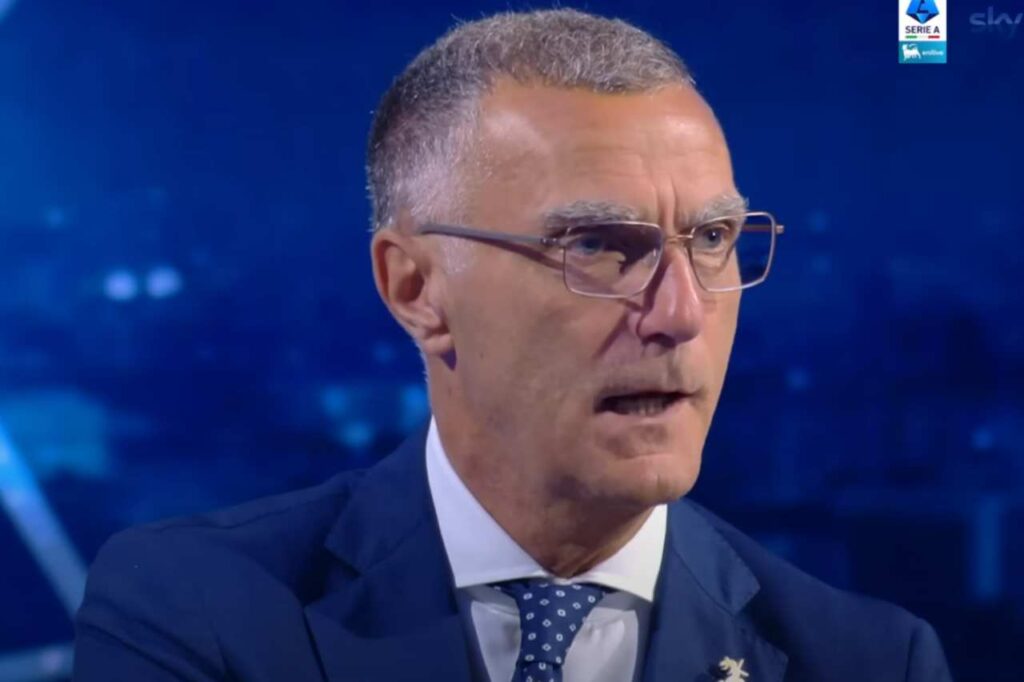
The difficulties of Inter in the Champions League as seen by someone who wore that jersey for twenty years. Bergomi, former defender and Nerazzurri captain, gave an extensive interview to the Gazzetta dello Sport in which he discussed the team’s current situation, the structural shortcomings of Italian football in Europe, and the performance of some individuals.
The starting point is a systemic reflection: “How can we think that one of our clubs can win the Champions League? We need to calm general expectations. In European football, all teams have at least two, three, or four fast players, capable of one-on-one situations. And we don’t. So we always have to find other ways, other methods, to try to go as far as possible.” This premise also applies to Inter: “They need to lower expectations in Europe, otherwise they always play with anxiety. They have a high average age, while other European teams are generally younger, run a lot, and press high without fear. It’s a different kind of football compared to what we play in our league.”
Bergomi identifies balance as the historical key to Nerazzurri’s European successes, and sees a tension here with the football proposed by Chivu: “In recent years, Inter has always been very good at compensating for certain shortcomings precisely through play and balance. Now Chivu wants to push the defensive line higher to have a team that plays further up the pitch, but in doing so you expose yourself a lot and lose that balance I mentioned before.” That same balance, he emphasizes, was decisive in the club’s best continental nights: “When Inter managed to do well in the Champions League, it wasn’t because they were the strongest, but because they were always the best in other aspects: play and balance.”
Regarding the defense’s performance, the former captain shifts the focus from individuals to a very specific collective problem: “Inter lost two markers who have not been replaced: Acerbi and De Vrij, who were the only two man-to-man markers. In the summer they signed Stones, but the Englishman is not that type of player.” His assessment of Akanji, Bastoni, and Bisseck remains positive on an individual level: “They are all good players, all internationals, but defending in open space is difficult for anyone.”
On goalkeeper Martinez and his risky outings, Bergomi prefers to redirect the question to the bench: “Actually, the question is another and should be asked to Chivu and the goalkeeping coach: what do you ask of him? Does he have to stay very high because the defensive line is up, so he has to come out and take risks, or are those interventions his own initiative?” His defense of the Spaniard is clear: “It was precisely against Bruges that he started the move that led to the 1-1 goal. And other times he has made extraordinary saves. So I will always defend Pepo. For me, he is a good goalkeeper.”
Bergomi also mentions Provedel, who has yet to make his debut: “Provedel’s moment will come, maybe as early as Saturday because there are a lot of games, but I don’t feel certain about it.” As for the Champions League objective, the picture is clear: “Like a team whose goal is first to reach the playoffs and get those 11 or 12 necessary points. They must not let themselves be overwhelmed by the anxiety of having to finish among the top eight.”
In closing, the focus shifts to the coming weeks: Chivu will have to manage rotations between Bologna, Shakhtar, and Fiorentina, with the next European match presenting itself as a must-win appointment. “At this point, the opponents know that Inter is practically obliged to take all three points. It will require a very intelligent match. There is no more room for mistakes.”
 CONTINUE READING