

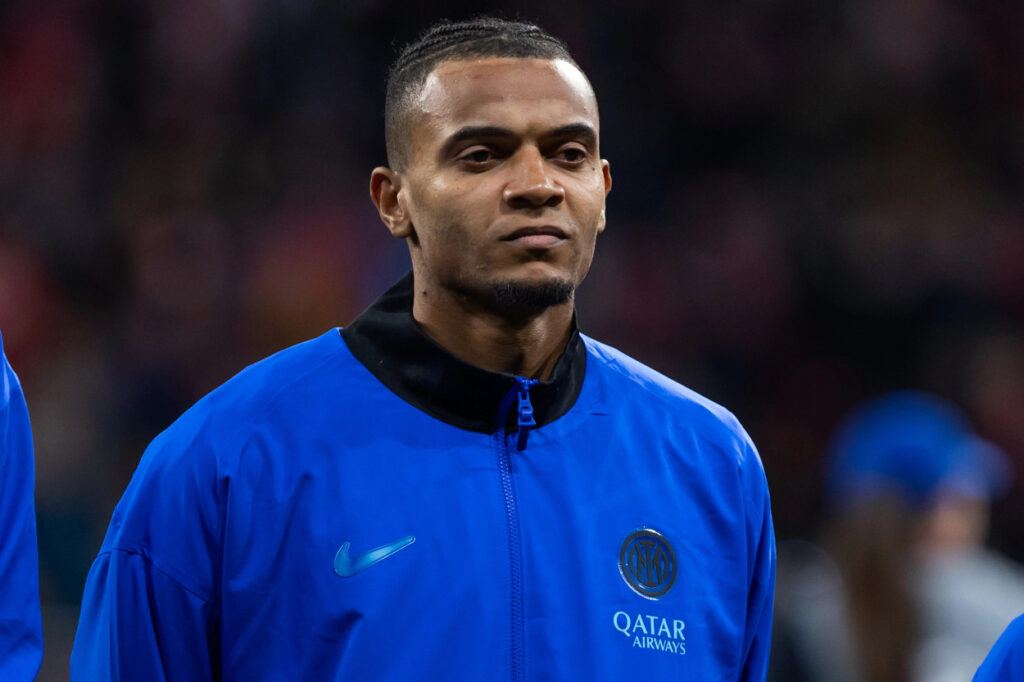
Thirteen goals conceded in ten league matches, six in two Champions League games, three in the derby against Milan alone: Inter‘s defense has become a structural problem, not an isolated incident. According to the Gazzetta dello Sport, the Nerazzurri backline appears “transformed, less secure, easier to break through” compared to last season, while the attack has produced 31 goals in 13 matches.
The newspaper analyzes the possible causes and identifies the psychological aspect as the main factor. The formation is the same as last year, the players are the same, and so are the strategies. Yet something has changed: “It’s hard to believe that those who just a few months ago built Inter’s fortress are now working to tear it down,” writes the Rosea. The result, in numbers, is clear: with the starting defensive line — Bisseck, Akanji, and Bastoni — on the field, the average number of goals conceded reaches 2 per game in 7 matches, with an average of 12 shots allowed to opponents and 3 big chances per match.
The most surprising statistic concerns the comparison with the alternatives. By including players like Carlos Augusto, Stones, or Pavard, the average number of goals scored by opponents drops from 2 to 0.83, the unfavorable expected goals decrease from 1.64 to 1.13, shots conceded go from 12 to 10.8, while big chances allowed drop from 3 to 2.33. The so-called second-string players, essentially, produce better defensive stats than the starters.
At the root of it all, according to Gazzetta, is an attitude problem: “approaches to matches that are too soft, lapses in concentration, avoidable mistakes, excessive confidence.” Even Chivu had asked, on the eve of the derby, for a “more provincial” team, meaning more aggressive and fierce in defense. After the defeat, the coach pointed to “hunger” as the element to rediscover: “We are aware that sometimes we look too much to the past, we need to find a bit of hunger and nastiness when certain things are taken for granted, we need to find focus and consistency.”
There is also a numerical component related to the squad. The injuries to Stones and Pavard have reduced rotations, and the two have accumulated just 397 minutes between them in thirteen matches. Added to this is the absence of Acerbi and De Vrij, who left in the summer at the end of their contracts with 26 and 17 appearances respectively last season, plus Akanji’s performance below expectations, as he returned fatigued after starring in the World Cup with Switzerland. The picture that emerges, concludes the Rosea, is one of “injuries, limited personnel, few alternatives, and psychological difficulties.”
 CONTINUE READING
