

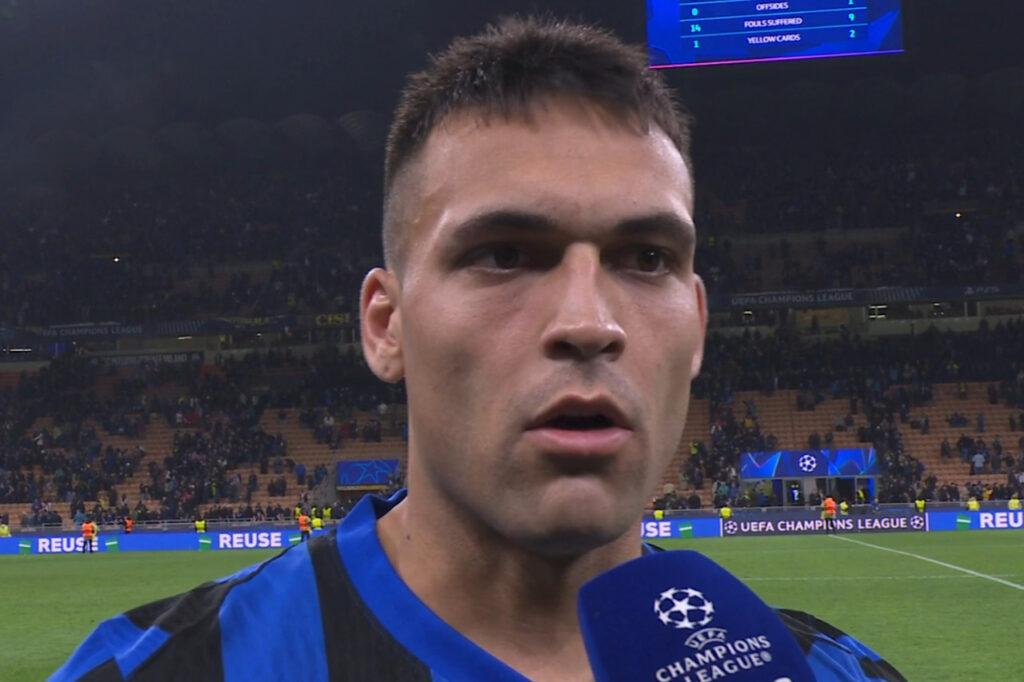
Zero points in two matches, seventh defeat in the last eight in the Champions League, fourth in a row at San Siro. In the Corriere dello Sport, Alberto Polverosi has captured with merciless numbers the crisis of Inter after the heavy defeat against Bruges: “But at the back, Inter sank like the Titanic.”
The statistic that the journalist points to as the most revealing concerns the average age: excluding the two goalkeepers, Bruges fielded starters with an average age of 24.3 years, Inter’s was 28.5. “Four years of difference and it showed,” writes Polverosi, who identifies that physical and athletic gap as one of the main reasons for the Belgian comeback.
The analysis starts from a promising beginning for the Nerazzurri. Bruges, however, responded immediately, building their danger on the wings with Virgili and Carlos Forbs, fast wingers who, according to Polverosi, require preventive marking: in open field they are unmanageable. It was precisely the speed of the Belgian wingers that produced the visitors’ lead: from a wasted corner kick, Carlos Forbs started again from his own area finding Inter all pushed forward, the foul by Calhanoglu was “as inevitable as the penalty goal” by Tresoldi.
Lautaro‘s equalizer a minute before halftime seemed to have restored order, also certified by the 18 to 6 shots in Inter’s favor at the break. But at the start of the second half, writes Polverosi, the Nerazzurri made “an unforgivable mistake,” believing they had the match in hand: “Chivu’s team collapsed, and badly.” The second counterattack goal extinguished Inter’s reaction, with Akanji and Bastoni who “disappeared” and a mistake described as “incomprehensible” by Josep Martinez on the second goal. Tresoldi ended the evening with a hat-trick, described by the journalist as a “true striker” who “in the penalty area is a sentence,” with Bruges then closing at 4-1 with the third counterattack of the night.
Polverosi acknowledges that the result does not fully reflect the overall performance — 31 shots by Inter, more than double their opponents — but emphasizes how the way the defeat came about remains “bitterly surprising.” At the back, he concludes, it was “a delirium.”
 CONTINUE READING