

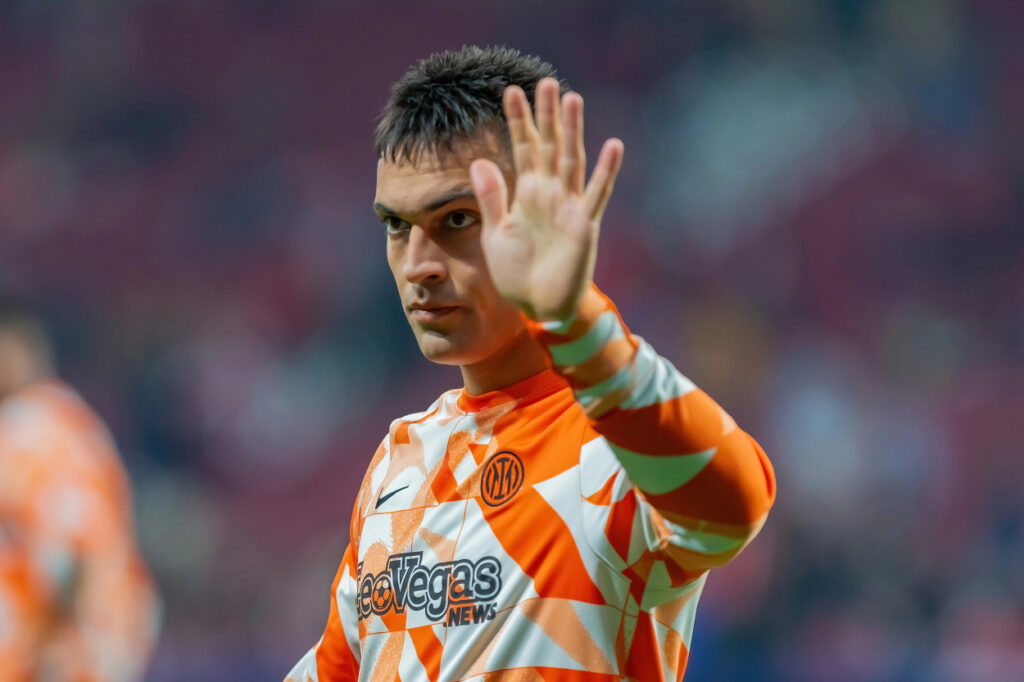
Raised in a locker room, the son of a footballer who worked nights in a nursing home for the elderly and a mother employed in cleaning: Lautaro Martinez retraces his origins with clarity, without filters. “I always say that I was born in a locker room, because my father was a footballer. Even when we were three or four years old, together with my brother, who is ten months younger than me, we would attend training sessions, technical meetings, and motivational talks,” says the Inter striker.
Football came gradually. First as a sweeper, like his father, then as a winger, and finally as a center forward at Racing. “I liked, as I still do today, dropping back to participate in the play, receiving the ball and interacting with my teammates. When I played in defense, I was the kind of player who would clear the ball forward, I often threw myself to the ground. And in part, this characteristic has stayed with me even today.” Those years taught him how to mark and defend: skills that, he emphasizes, are also useful in the role of striker.
The hardest period remains his childhood. The family lived in a house lent by friends, barely able to pay for electricity. Football boots were bought in installments or with borrowed money. “I remember it because it was a time when we really suffered a lot. But it is precisely in those moments that you learn to give things their true value,” he says. Today he is satisfied to be able to support his family, even though his parents continue to work in their respective jobs.
When European teams started calling him, he was 18 or 19 years old and preferred to stay at Racing to make a name for himself. His breakthrough with the Argentine national team came at the 2021 Copa America, but it was experienced with a huge personal burden: his daughter was born in February, she was two and a half months old at the start of the training camp and almost five months when he returned. “That lost time, especially with my first daughter, at the moment when I had just become a father, was tough,” he admits.
Despite everything, that Copa America marked a collective turning point. The group — in which both Dibu and Chino Martínez Quarta also became fathers during the training camp — managed to win a title that had been missing from Argentina for years. “We were building something beautiful. A group that defended itself both on and off the field,” Lautaro recalls. Finally, a mention of a behind-the-scenes episode regarding Inter on the eve of the 2022 World Cup, already addressed in a documentary, which the source text leaves unresolved without further development.
 CONTINUE READING