

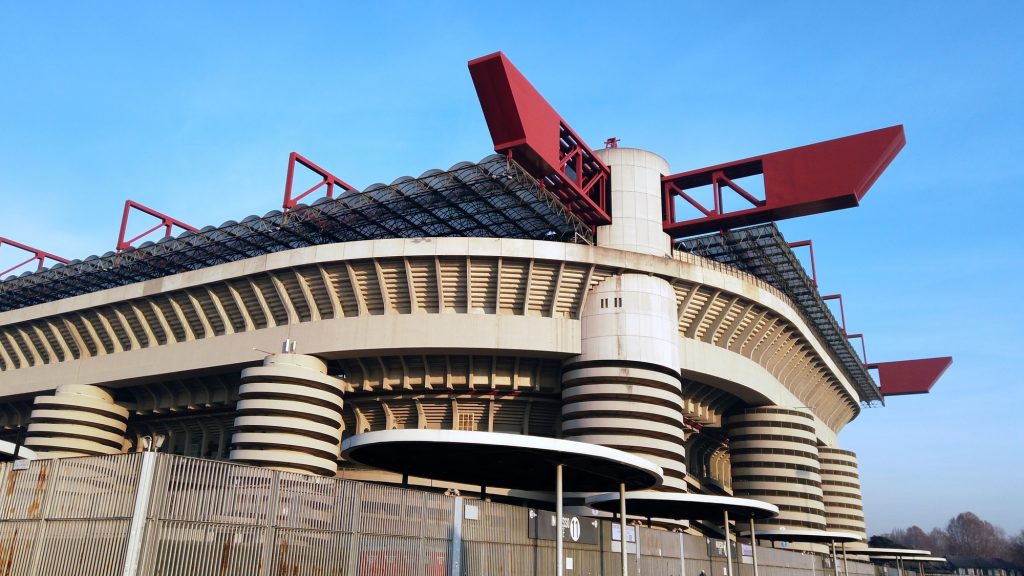
Inter and Milan have finally unveiled their proposal for the construction of the new stadium in the San Siro area, complying with urban planning regulations and the principles of urban regeneration. The project involves partially preserving the current Meazza stadium by maintaining the façade and parts of the second-tier grandstand in the southeast area, thus preserving the historical and symbolic memory of the venue.
The new facility will be a state-of-the-art stadium with a capacity of about 71,500 seats, including a significant increase in corporate areas. According to details revealed by Corriere della Sera, the project also envisages the creation of commercial spaces, a hotel, offices, and dining facilities, aimed at catering not only to spectators but also to residents of the surrounding neighborhood.
A major construction project will be the removal of the Patroclo tunnel, which will be replaced by new infrastructure. The total cost of the operation amounts to approximately 1.25 billion euros, broken down as follows: 707.9 million euros for the construction of the stadium, 390.1 million euros for the multifunctional complex, along with additional related expenses.
According to the estimates from both clubs, the investment will not only affect the sporting area but will have a positive economical impact on the entire locality, generating a total economic activation of roughly 4.6 billion euros. The redevelopment will also extend to the nearby residential neighborhood, elevating the entire urban context.
Inter and Milan have long considered this as the most advantageous option compared to a full-scale renovation of the Meazza, which would cost around 836.7 million euros. The transformation of the current stadium area would involve creating new facilities, including a hotel, office spaces, shops, and community spaces designed for both young and elderly residents.
The objective is to guarantee a balance between innovation and tradition, making the new stadium a key landmark not only for football but also for the social and cultural life of the city.
