

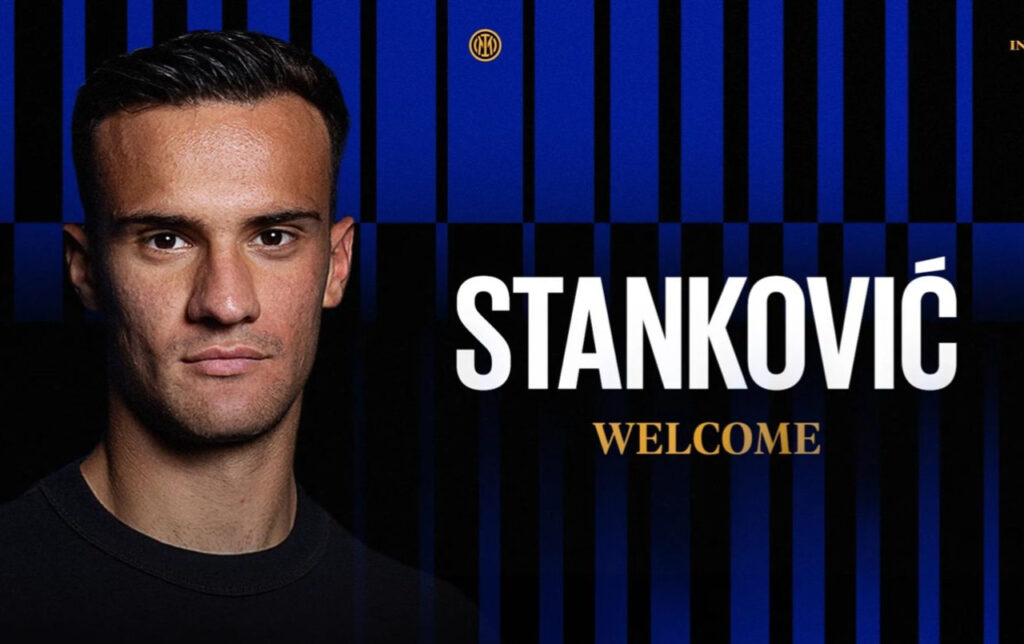
Inter has officially announced the return to Milan of Aleksandar Stankovic, midfielder born in 2005, through the activation of the 23 million buy-back clause agreed with Bruges at the time of the player’s sale.
An agreement that allowed Inter to maintain control over the player’s future. But is it correct to say that Inter sold Stankovic for 10 million and then bought him back for 23? Not exactly.
From a financial point of view, the presence of the buy-back clause means that the player’s value on the balance sheet does not coincide with the entire amount paid for the buy-back, but with the difference between the amount “paid” to bring the player back to Milan and what was received from the previous sale. In practical terms, the net value of the operation is 13 million euros, obtained from the difference between the 23 million of the buy-back and the 10 million of the sale. This will be the amount that Inter will begin to amortize over the duration of the new contract.
The agreement runs from July 1, 2026 until June 30, 2031, which means that the estimated annual impact will be about 2.6 million euros per season, to which the gross salary cost of the player must be added.
And in case of a sale?
If Inter decides to sell Stankovic in this transfer window, the capital gain would be calculated starting precisely from those 13 million. For example, a sale for 40 million euros would generate a capital gain of 27 million.
 CONTINUE READING
