

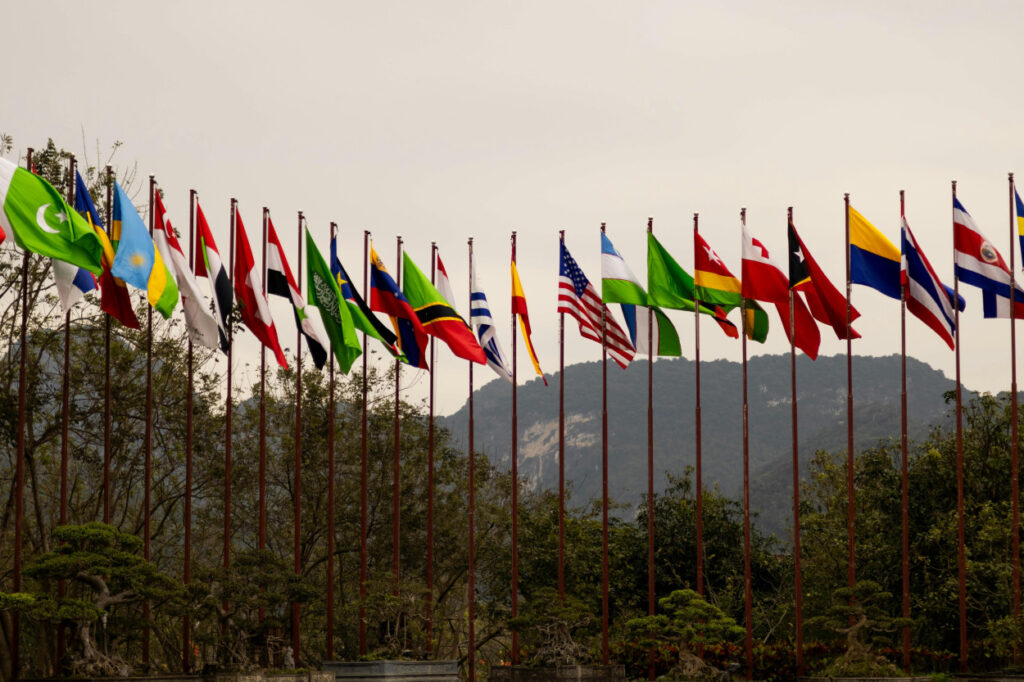
National identification: cheering for something bigger The first and most powerful mechanism is identification with the national team. During a club championship, fandom divides: the city splits between two colors, local rivalries fuel conflicts that last generations. The World Cup reverses the dynamic. Suddenly, millions of people who support different teams find themselves on the same side. The boundary of belonging shifts from the neighborhood to the nation, and the sense of community is exponentially amplified. Social psychology has a term to describe the phenomenon: social identity, a concept developed by Henri Tajfel in the 1970s. When the national team takes the field, the fan is not simply watching eleven players: they are watching a symbolic representation of their country, their culture, their history. A victory becomes a collective victory – and a defeat, a shared mourning. It is the same reason why rational, fully aware adults, knowing they have no control over the outcome of a match, experience the final minutes of a quarter-final with a racing heartbeat and sweaty hands.
Scarcity and the anticipation effect: the power of “only every four years”
There is a second factor, less obvious but just as powerful: scarcity. The World Cup is played every four years. There is no other football competition with such a long cycle, and consumer psychology teaches that what is rare is perceived as more valuable.
The four-year wait generates a buildup of expectation that is released all at once in a month-long tournament. Every match carries enormous weight: there will be no rematch the following week, you cannot make up for it in the next round. Elimination is final – and to see your national team at the World Cup again, you will have to wait another four years, assuming they qualify. Italy, after being excluded in 2018 and 2022, knows well how long that void can be.
The knockout structure further amplifies the tension. From the quarter-finals onwards, every match is a final: ninety minutes that can end a dream or keep it alive. No league championship format, however exciting, can replicate the concentrated drama of a single-elimination phase in a world tournament.
Active involvement: from the couch to participation
But perhaps the most interesting aspect of recent World Cup cycles is the transformation of the fan from passive spectator to active participant. The World Cup is not just watched: it is played.
Fantasy games dedicated to the tournament – from Fantamondiale to private leagues among friends – have recorded steadily growing numbers, edition after edition. Prediction groups explode on every social platform, betting pools among colleagues become an office ritual, and prediction rankings fuel discussions that last for weeks.
The mechanism is simple and powerful: predicting a result, betting on an outcome – even just symbolically – turns the spectator into a protagonist. Suddenly, every match matters, even one between two national teams for which you feel no attachment. If I have an open prediction on that match, if I have bet on a draw or on the victory of the underdog, those ninety minutes concern me personally.
It is not surprising, then, that every edition of the tournament sees a spike in traffic on betting platforms for the 2026 FIFA World Cup and on all services related to sports predictions. It is the natural evolution of emotional involvement: the desire to test one’s expertise, to turn analysis into a concrete prediction, to add another level of participation to the tournament experience.
Cognitive psychology speaks of skin in the game: when something is at stake – a prediction to defend, a position to uphold – the level of attention and involvement measurably increases. It is the same principle by which a card game among friends becomes more exciting when a pizza is at stake.
The community effect: the World Cup as a collective ritual
Finally, there is a social dimension that goes beyond the individual fan. The World Cup is a collective ritual, an event that synchronizes the emotions of millions of people at the same time. Giant screens in city squares, dinners with friends organized around match times, messages sent a second after a goal: the tournament creates a temporary emotional community that crosses ages, social classes, and cultural differences.
Neuroscience has shown that experiencing an emotion in a group intensifies it. The joy of a goal in a packed stadium is physiologically different – more intense, more lasting – than the same joy experienced alone in front of the television. The World Cup, due to its scale and rarity, maximizes the effect: there is no other sporting event capable of simultaneously putting a billion people across five continents in the same emotional state.
We can therefore state that the World Cup is not simply a sporting tournament with good media coverage. It is a psychological and social phenomenon that activates deep mechanisms of belonging, anticipation, and participation. Understanding why it involves us so much does not take away from the magic – on the contrary, it adds a level of awareness that makes the experience even richer. The 2026 edition, with 48 teams and an unprecedented format, promises to amplify everything: the number of matches, global involvement, and inevitably, the emotional intensity of those who watch, comment, predict and – every four years – feel part of something bigger again.
