

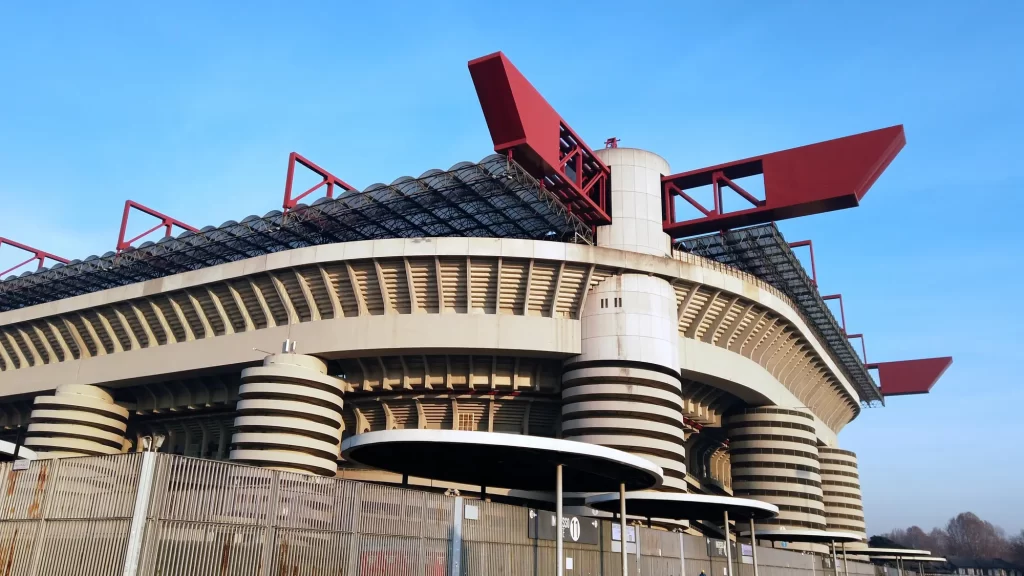
With the approval of the sale of the San Siro area to Inter and Milan, the process that will lead to the construction of the new club-owned stadium has formally begun. According to the plans shared by the two clubs, at the same time as the new facility is built, the Meazza—which has reached 99 years of life—will have to be gradually dismantled.
The hypothesis, reported this morning in the pages of La Gazzetta dello Sport, is to complete the almost total demolition of the ‘old’ stadium within a year of the opening of the new facility, scheduled for 2031. Once the two teams have moved into their new home, the demolition process can begin.
As explained by industry experts, the demolition of a structure of this size would be carried out using specialized machinery. The first phase would consist of removing all non-concrete elements—glass, barriers, railings, and doors—before moving on to the actual demolition, with the help of large mechanical pincers capable of crushing the structure. The work would proceed from top to bottom, starting with the roof and the third tier, and finally ending with the first. Once the concrete is reduced, it would be separated from the reinforcing steel to be properly disposed of.
Not everything, however, will be erased: the clubs’ project foresees that a small part of the stadium will remain standing, about 10% of the overall structure. This would be the South-East corner, with a tower, a section of the orange stand, and a fragment of the Curva Sud. This portion would have a new function, being transformed into spaces for offices and commercial activities. Among the ideas under consideration is also the creation of a museum dedicated to San Siro, where images, memorabilia, and testimonies of over a century of football history would be preserved.
In the Feasibility Document of the alternative projects, presented by Milan and Inter, the current stadium is depicted as a reduced building surrounded by greenery, almost dissolving next to the modernity of the new facility. A symbol that, although transformed and downsized, would still maintain a connection with collective memory and with the emotions that San Siro has given to generations of fans.
